
The Short Answer
The PM job market in 2026 has recovered with PM job postings up +12% YoY and AI PM roles growing +85%, though hiring is more selective than the pandemic-era peak.
Hiring has stabilized after the 2022–2023 downturn—more selective than the 2020–2021 boom but well above 2023 lows. Companies expect AI fluency, demonstrated impact, and deeper specialization, while AI PM roles are the fastest-growing segment.
Key Takeaways
| Detail | At a Glance | Notes |
|---|---|---|
| Job Postings YoY | +12% | Recovery from 2023 lows |
| AI PM Role Growth | +85% | Fastest-growing segment YoY |
| Remote/Hybrid Available | 45% | Down from 70%+ in 2021 |
| Time to Hire | 6–10 weeks | Faster than 2023 |
| Senior PM Base Salary | $170K–$220K | Mid-level $130K–$160K |
Market Overview 2026
The PM job market has recovered from the 2022-2023 tech downturn but remains more competitive than the 2020-2021 boom. Companies are hiring, but with higher standards and more focused role definitions.
PM Job Postings YoY Change
+12%
Recovery from 2023 lows
Avg Applications per PM Role
250-400
Still competitive
Avg Time to Hire
6-10 weeks
Faster than 2023
Remote/Hybrid Available
45%
From 70%+ in 2021
Entry-Level PM Openings
15%
Of total PM roles
AI PM Role Growth
+85%
YoY increase
PM Demand & Supply
Demand for senior PMs (5+ years) remains strong, while entry-level positions are highly competitive. Companies have become more selective, often preferring candidates with directly relevant experience over potential hires who need training.
The supply of PM candidates has grown significantly as the profession became more visible and attractive. This means standing out requires more than basic qualifications—demonstrated impact, relevant skills, and strong interviewing are essential.
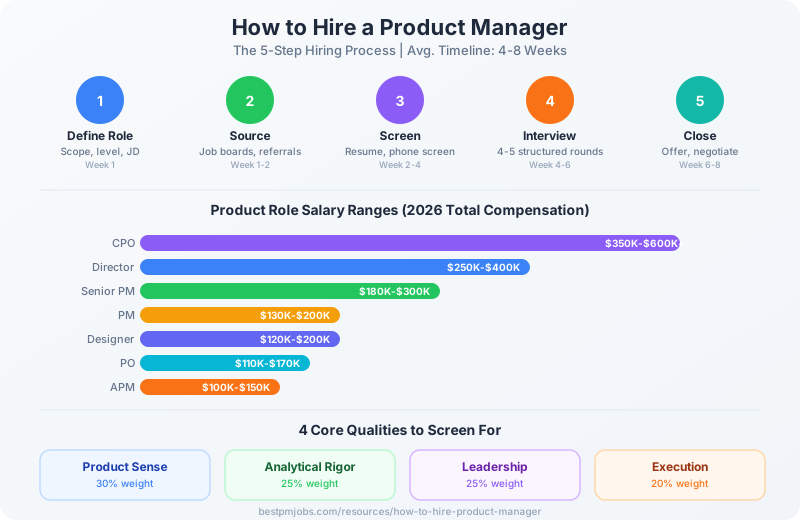
PM Hiring Process & Salary Ranges (2026)
Hiring managers: follow this 5-step process to hire product managers. Salary data covers all product roles from APM to CPO.
Key Demand Patterns
High Demand:
- • Senior PM (5-10 yrs experience)
- • AI/ML product experience
- • B2B/Enterprise PM
- • Platform/API PM
- • Growth & Monetization
Lower/Competitive:
- • Entry-level PM roles
- • Generalist PM without specialty
- • Consumer PM at mature companies
- • Pure career changers without experience
Skills in Demand
AI/ML Product Management
Very HighBuilding products with AI components, LLM integration, ML systems
Data & Analytics
HighSQL, product analytics tools, experimentation, metrics definition
Growth & Monetization
HighUser acquisition, retention, pricing, revenue optimization
Platform & API PM
HighDeveloper platforms, APIs, ecosystem strategy
Enterprise/B2B
HighComplex sales cycles, multi-stakeholder, security/compliance
Technical Depth
IncreasingArchitecture understanding, technical tradeoffs, eng partnership
Salary Trends
PM salaries have plateaued from 2021-2022 peaks. Base salaries remain strong, but total compensation has decreased as public company equity values declined. Startup equity is speculative; established companies offer more stable comp.
| Level | SF Bay Area | NYC | Seattle | Remote |
|---|---|---|---|---|
| Associate PM (0-2 yrs) | $110,000-$150,000 | $100,000-$140,000 | $100,000-$135,000 | $85,000-$120,000 |
| PM (2-5 yrs) | $140,000-$180,000 | $130,000-$170,000 | $125,000-$160,000 | $110,000-$150,000 |
| Senior PM (5-8 yrs) | $175,000-$230,000 | $160,000-$210,000 | $155,000-$200,000 | $140,000-$180,000 |
| Staff/Principal PM (8+ yrs) | $200,000-$280,000 | $190,000-$260,000 | $185,000-$250,000 | $160,000-$220,000 |
| Director PM | $230,000-$320,000 | $210,000-$300,000 | $200,000-$280,000 | $180,000-$250,000 |
Base salary ranges. Total comp (including equity, bonus) typically 1.5-3x base at established tech companies. Equity value highly variable.
Remote vs In-Office Trends
Fully Remote
20%Trend: Declining
Mostly startups and distributed-first companies
Hybrid
35%Trend: Growing
Most common model, typically 2-3 days in office
In-Office
45%Trend: Growing
Especially at large tech and traditional companies
Hot Industries for PM Hiring
| Industry | Trend | Role Types | Salary Premium |
|---|---|---|---|
AI/ML OpenAI, Anthropic, AI startups, AI divisions of big tech | Very Hot | AI PM, Platform PM, Applied AI PM | +20-40% |
Enterprise SaaS Salesforce, ServiceNow, Datadog, growing B2B companies | Strong | B2B PM, Platform PM, Growth PM | Market rate |
Fintech Stripe, Square, Robinhood, neobanks | Steady | Consumer PM, Platform PM, Compliance | +10-20% |
Healthtech Veeva, Epic, health startups, telehealth | Growing | Healthcare PM, B2B PM, Consumer Health | Market rate to +15% |
Climate Tech Clean energy startups, ESG software | Growing | Hardware PM, B2B PM, Consumer | Varies widely |
Defense Tech Palantir, Anduril, defense contractors | Growing | Platform PM, Hardware PM, Security | +10-20% |
Consumer Tech Meta, Netflix, consumer apps (more selective) | Selective | Growth PM, Core PM, Monetization | Market rate, high equity potential |
Hiring by Company Size
Early Startup (1-50)
Low VolumeLooking for: Scrappy generalists who can do everything
Growth Startup (50-500)
Medium-High VolumeLooking for: Specialists and leaders who can scale
Scale-up (500-2000)
High VolumeLooking for: Experienced PMs who can navigate complexity
Large Tech (2000+)
Steady VolumeLooking for: Proven track records, specific expertise
Traditional Enterprise
Growing VolumeLooking for: PMs who can operate in non-tech contexts
Market Predictions
AI fluency becomes table stakes
Very likelyTimeframe: 12-18 months
Implication: PMs without AI understanding will be disadvantaged
Return to office continues
LikelyTimeframe: Ongoing
Implication: Fully remote PM roles will be minority, mostly at startups
Entry-level PM remains competitive
Very likelyTimeframe: Ongoing
Implication: Career changers need stronger signals (projects, experience)
PM specialization increases
LikelyTimeframe: 2-3 years
Implication: Generalist PM paths narrow; specialists command premiums
PM headcount efficiency pressure
LikelyTimeframe: Ongoing
Implication: Companies expect more from fewer PMs; "lean PM" continues
Frequently Asked Questions
Is the PM job market strong in 2026?
The PM job market has stabilized after the 2022-2023 tech downturn. Hiring is more selective than the 2020-2021 boom but significantly better than 2023. Companies are hiring, but with higher bars—expecting more experience, AI fluency, and demonstrated impact. Senior PM roles remain in high demand.
What skills are most in demand for PMs in 2026?
Top in-demand skills include: AI/ML product experience, data and analytics fluency, growth and monetization, platform and API product management, and enterprise/B2B experience. Soft skills like stakeholder management and executive communication remain crucial. Technical depth is increasingly valued.
Are remote PM jobs still available?
Yes, but less than peak pandemic. About 40-50% of PM roles offer remote or hybrid options, down from 70%+ in 2021. Fully remote is less common, especially at senior levels. Geographic hubs (SF, NYC, Seattle) have more in-office requirements. Smaller companies and startups often more flexible.
How has AI affected PM hiring?
AI affects PM hiring in two ways: 1) Companies want PMs who can build AI products—AI PM roles have exploded, 2) Some argue AI will reduce PM headcount by automating parts of the role. Currently, AI experience is a major hiring advantage, while AI tools are becoming expected PM competencies.
What are PM salaries trending in 2026?
PM salaries have plateaued or slightly decreased from 2021-2022 peaks, especially in total compensation (equity values down). Base salaries remain strong: $130-160K for mid-level, $170-220K for senior, $200-280K+ for director level in major markets. Startups offer lower base but potentially higher equity upside.
Which industries are hiring the most PMs?
AI/ML companies are hiring aggressively. Fintech, healthtech, and enterprise SaaS remain strong. Consumer tech is more selective. Climate tech and defense tech are growing areas. Traditional industries (retail, finance, healthcare) continue to build out product functions, though often more slowly.
Is it harder to break into PM in 2026?
Yes, entry-level PM roles are more competitive. Companies prefer candidates with relevant experience, reducing pure "career changer" hires. APM programs remain competitive but are a key entry point. Internal transitions are often easier than external applications. Building portfolio projects helps stand out.
What size companies are hiring PMs?
All sizes are hiring, but patterns differ. Startups (seed-Series B) hire generalist PMs who can do everything. Growth stage (Series C-E) hire specialists and build PM teams. Large tech companies hire steadily but more selectively. Enterprise/traditional companies continue building PM functions.
About the Author

Aditi Chaturvedi
·Founder, Best PM JobsAditi is the founder of Best PM Jobs, helping product managers find their dream roles at top tech companies. With experience in product management and recruiting, she creates resources to help PMs level up their careers.